


SHOULDER PAIN MANAGEMENT & TREATMENT
Shoulder pain is common and can be caused by work injuries, sports injuries, general wear and tear, or dislocation of the shoulder joint as a result of an accident or trauma. Most shoulder pain conditions are treated effectively with physiotherapy intervention.
As Sydney’s leading shoulder physiotherapists, Infinite Health can help you successfully manage and treat shoulder pain. Our experienced physiotherapists accurately diagnose and create a personalised treatment plan, to alleviate pain and restore functionality in the shoulder joint. There’s a reason our physios have amassed more than 1,800+ five star Google reviews across our clinics - if you are experiencing shoulder pain, book a consultation at the Infinite Health Sydney physiotherapy clinic today so you can return to your pain-free life.
ANATOMY OF THE SHOULDER
Your shoulder is a complex joint made up of highly mobile structures. There are 3 bones which make up the area of your shoulder: upper arm bone (humerus), shoulder blade (scapula) and collar bone (clavicle).
The shoulder complex is composed of several structures, comprising two joints.
-
Glunohumeral joint - Traditionally labelled the ‘shoulder joint’. This joint is where your upper arm bone fits into the groove of a rounded socket provided by the shoulder blade.
-
Acromioclavicular joint: Is where your collarbone meets the top of your shoulder blade.
A combination of strong muscles, tendons, ligaments, and capsular structures, lined with synovial fluid, helps support and move this structure. The rotator cuff is one of the more well-known structures that support the shoulder joint and comprises a group of 4 muscles that cross the shoulder joint.


Common conditions that we treat
SPORTS/GYM
Muscle injuries
Joint sprains
Gym injuries
Meniscus injuries
ACL or MCL injuries
Running injuries
Tendinopathy (tendinitis)
What are common shoulder pain conditions?
Several conditions can cause shoulder pain. The most common shoulder pain conditions include:
-
Labrum Injuries
-
Shoulder Tendinopathy
-
Tendon Tears
-
Instability
-
Frozen Shoulder - Adhesive Capsulitis
-
Arthritis
-
Fractures
What our patients have to say
How Our Physios Help



OUR SYDNEY PHYSIOTHERAPIST TEAM

Dr Calvin Lai
General & Sports Chiropractic
Speaks English & Basic Cantonese
My passion is to help my patients live pain free in their daily lives or sport.
Every treatment plan is unique for each of my patients, utilising hands-on techniques such as remedial massage, chiropractic adjustments, and joint mobilisation.
These treatments are complemented by tailored rehabilitative exercises designed to relax overworked muscles while strengthening weaker ones.
Symptoms of Shoulder Pain
There are many different causes of shoulder pain, each with its own unique set of symptoms. Some common symptoms you may experience are:
-
Pain within the shoulder joint, at the front, back or down the upper arm.
-
Pain can be deep, dull aches, sharp, superficial.
-
Reduced amount of movement, which can be limited by stiffness, tightness, pain, or weakness.
-
Weakness and poor activation of surrounding muscles.
-
Altered sensations such as pins/needles, burning or numbness.
-
Instability sensation where the joint may feel apprehensive and/or ‘slipping in/out’.
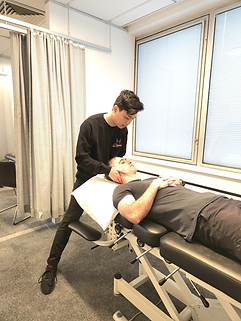
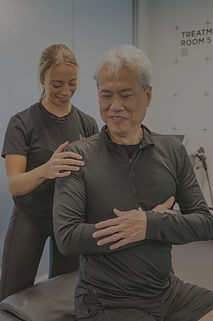
Our Sydney Physiotherapists At Work


Frequently Asked Questions
How can a physio help treat shoulder pain?
Physiotherapists help treat shoulder pain by providing accurate diagnoses and effective management through thorough examinations. At Infinite Health Sydney, our physiotherapists conduct a comprehensive assessment and inquire about potential causes, aggravating factors, and factors that relieve symptoms.
To ensure your physiotherapist has all the valuable information required for developing an appropriate treatment plan, they may refer you to a doctor for further testing or imaging if they want to clarify the extent of the damaged area. Imaging may include an X-ray, ultrasound, or MRI.
What issues can cause shoulder complications?
-
Neck and upper back problems: Issues with the joints and nerves in one's neck and upper back can also affect the shoulder, leading to pain.
-
Poor posture of the mid-back: Having an excessive amount of rounding (kyphosis) of the mid-back (thoracic) region can place excess stress and cause a dysfunction of the shoulder joint.
-
Axillary nerve injury: This nerve can often be damaged by a shoulder dislocation and can result in weakened shoulder muscles and loss of sensation.
-
Thoracic outlet syndrome: Is a group of disorders that occur when blood vessels or nerves in the space between your collarbone and your first rib (thoracic outlet) are compressed.
-
Muscle imbalances: Dysfunction of the muscles around the shoulder, neck, and mid-back can cause shoulder pain.
-
Health complications: Problems affecting your heart and lungs can present as referred pain into the shoulder region. If symptoms are sudden and do not coincide with any recent mechanisms of injury, it is advised to seek immediate medical intervention.
What does treatment for shoulder pain look like?
Treatment for shoulder pain usually involves reducing pain and restoring movement and function. Your physiotherapist will devise a rehabilitation program, which generally consists of exercise to promote the healing process and improve the strength and flexibility of your shoulder.
You may also be prescribed medication to help alleviate the pain. These medications are often targeted at reducing inflammation and pain through treatment and exercises.
Is surgery required for shoulder pain?
While the majority of people experiencing shoulder pain will respond well to conservative physiotherapy treatment methods, some individuals may require surgery to resolve specific issues with the shoulder. Surgery may be necessary with conditions such as recurring or frequent dislocations, acute/chronic rotator cuff tears, or severe joint damage from a fracture or prolonged arthritis. Your physiotherapist and doctor will determine whether surgery is required through imaging, symptoms, and response to treatment.
What are the aims of physiotherapy treatment for shoulder pain?
At Infinite Health, our Sydney physiotherapists have four primary goals to treat shoulder pain, including:
-
Pain relief: Aimed to reduce unwanted sensations and avoid aggravating factors.
-
Education: On your condition, its causes, how it is treated, and how to prevent it from recurring.
-
Exercises: Rehabilitation exercises play a pivotal role in resolving shoulder pathologies and restoring function
-
Reduce the risk of injury/condition recurring: Through activity modification advice, as well as exercise and movement rehabilitation.